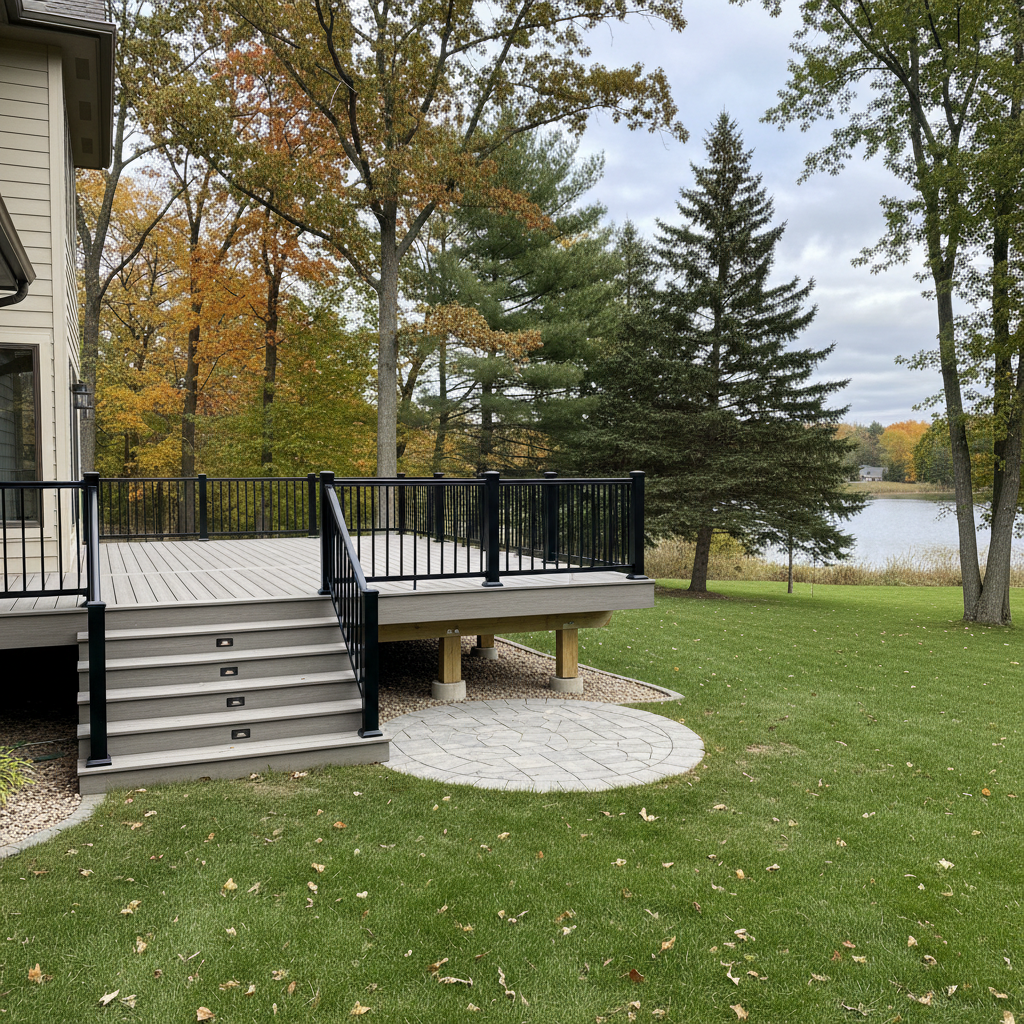
Thinking about a new composite deck? That's a smart move, honestly. They're pretty low maintenance, look fantastic, and really last a long time, especially considering our Minnetrista weather. But, man, I've seen too many folks around here — from the fancy lakefront homes on Lake Minnetonka to the newer spots further inland — make some totally avoidable mistakes. These blunders end up costing them time, money, and a whole lot of headaches. So, let's chat about what you should really watch out for.
Skimping on the Substructure
This is probably the biggest problem I see, and it's almost always hidden until it's too late. People get all focused on the beautiful composite boards, the railings, maybe some cool lighting. They completely forget that the real workhorse of any deck is what's underneath. If your joists aren't spaced correctly for composite (which often means tighter spacing than for traditional wood), or if the ledger board isn't properly flashed and attached, you're going to have issues. Composite boards just don't have the same structural rigidity as wood, so they'll sag if they're not supported right. And if water gets behind that ledger board, especially with our Minnesota freeze-thaw cycles? You're looking at rot and some serious structural problems down the line. A good contractor will always insist on a solid, code-compliant substructure, even if it adds a little to the upfront cost. Don't let anyone tell you they can just slap composite onto an old, rickety frame, okay?
Ignoring Local Building Codes and Permits
I know, I know, permits are a pain. Nobody loves dealing with bureaucracy. But trying to bypass them in Minnetrista is a huge mistake. Our local building department has specific requirements for decks, especially for things like frost footings (gotta get those deep enough to avoid frost heave in our clay soils!), railing heights, and how things are attached. If you build without a permit, you could face fines, be forced to tear the whole thing down, or even have serious trouble when you try to sell your home later. A reputable contractor, like us at Alpha Decks, will handle all the permitting for you. If a contractor tells you permits aren't necessary, or that they'll just 'handle it' without actually pulling one? That's a massive red flag. Seriously, walk away.
Focusing Only on Price Tag
Everyone wants a good deal; I totally get that. But when it comes to a composite deck, the cheapest bid is rarely the best deal in the long run. I've seen homeowners go with the lowest price only to find out the contractor used inferior fasteners, skipped proper drainage, or just didn't have the experience with composite materials. Composite isn't wood; it expands and contracts differently, and it needs specific installation techniques to look good and last. A cheap bid often means corners are being cut somewhere you can't see, and those cuts will definitely come back to haunt you. Get multiple quotes, sure, but make sure you're comparing apples to apples. Ask about warranties, both for the material and the workmanship. Ask for references and actually call them. You're investing in an outdoor living space; treat it like one.
Not Planning for Drainage and Water Management
This is super critical, especially with our heavy spring rains and snowmelt. If your deck isn't designed with proper grading underneath, or if you don't think about how water will drain off the deck surface and away from your house, you're asking for trouble. Water pooling around your foundation can lead to basement leaks, structural damage, and even pest problems. A good deck design will include a slight slope away from the house, and if you're building over a patio, consider a drainage system like an under-deck ceiling to keep the space below dry. Don't just assume the water will magically disappear.
Choosing the Wrong Contractor (or No Contractor)
This really ties into a lot of the points above. Some folks try to DIY a composite deck, thinking it's just like building with wood. It's not. Others hire a handyman who's never worked with composite before. You need someone who understands the nuances of these materials, the local codes, and how to build something that will stand up to Minnetrista's climate. Look for contractors with specific experience in composite decking, good reviews, proper licensing and insurance, and a clear communication style. Ask them about their process, how they handle permits, and what kind of warranty they offer on their work. Your deck is a big investment, and you deserve a professional who knows what they're doing.
Don't let these common mistakes derail your composite deck project. Do your homework, ask the right questions, and choose a contractor who truly prioritizes quality and compliance. You'll be enjoying your beautiful, low-maintenance deck for years to come, without any regrets. What a concept!